|
presented at NACIS 2006
Annual Meeting
The North American
Cartographic Information Society
ABSTRACT
PROXY Frontier . Deborah Natsios
America’s
Cold War imagination was profoundly invested
in the contested space of its 3rd world client
states.
The maps of “Proxy
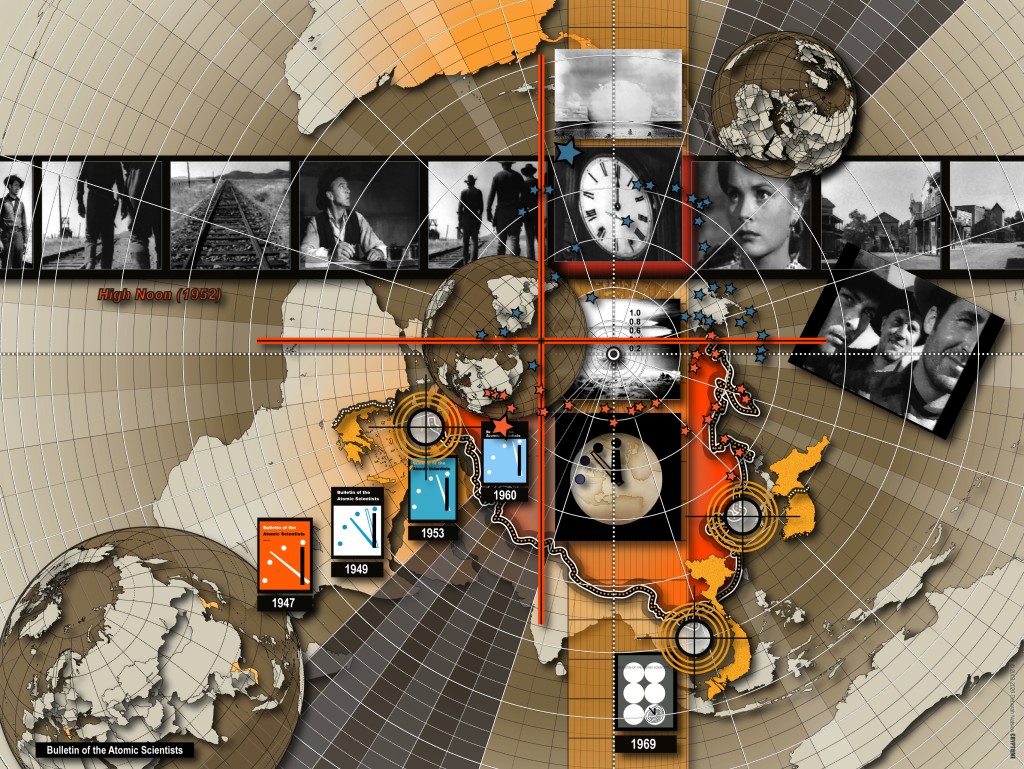
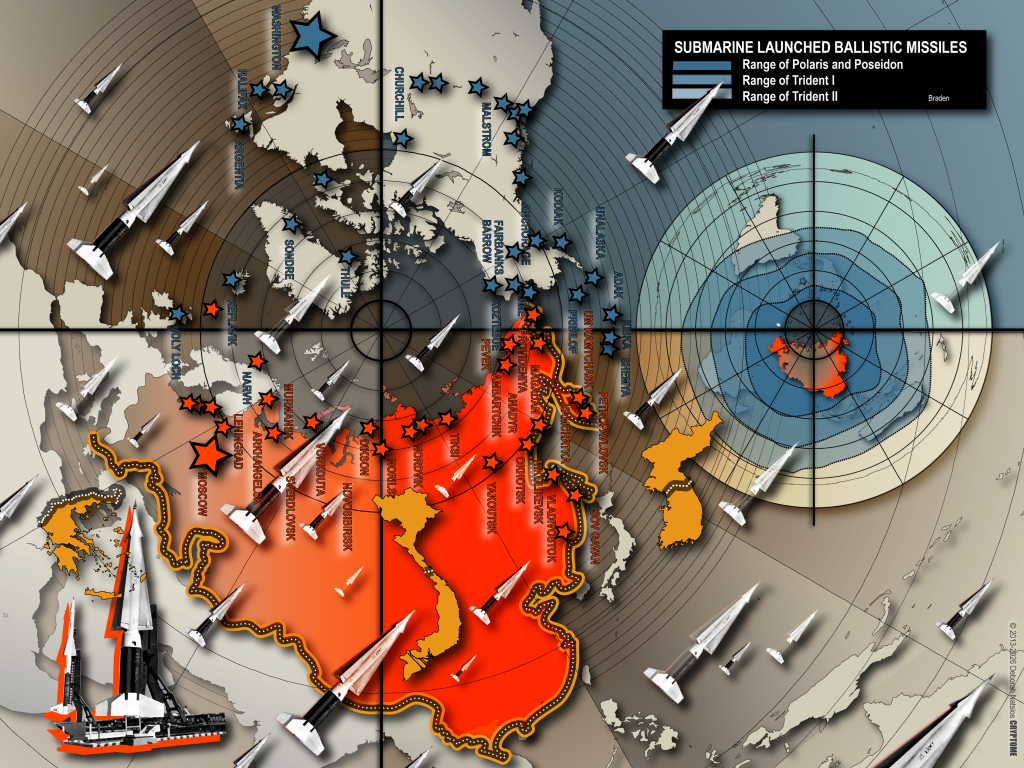
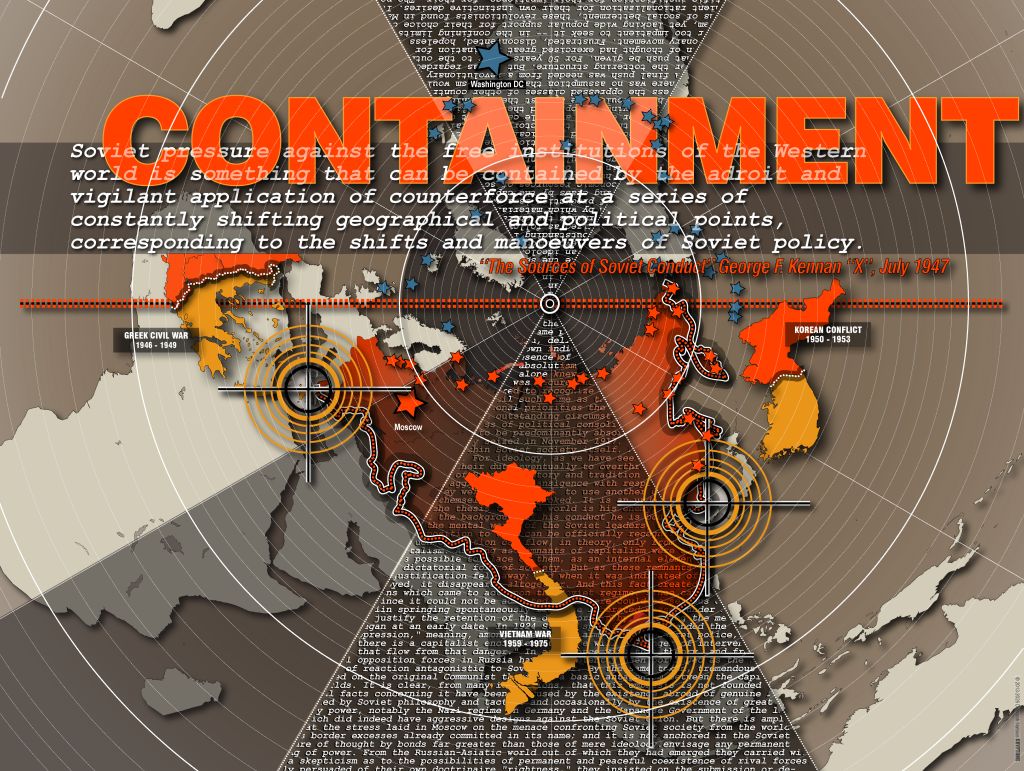
Frontier” track the post-WWII American
frontiers that emerged in Greece, Korea and
Vietnam - three key proxy states in which the
Cold War’s hot war consequences were played
out.
Historian Frederic
Jackson Turner had asserted in 1893 that
“frontier expansion created American
Democracy.” What came to be exalted as the
Turner Thesis provoked a half century of
historiographic debate about the continental
expansion of American national space and its
link to concepts of national identity and
character.
The Cold War’s
East-West bi-polarity recapitulated elements
of America’s prior investment in the “frontier
dialectic,” which saw the American West having
a “special relation to American history.”
Turnerian tropes
resurface in rhetoric linked to the Cold War’s
disputed demilitarized zones, bifurcated
nation-states, divided cities, estranged
enclaves, restrictive walls and marginal
buffer islands.
The problematic
denouement of Cold War’s frontier narrative
was anticipated by philosopher John Dewey, a
critic of Turnerian romanticism, who blamed
the nation’s ills on frontier excess.
“Proxy Frontier”
examines the mixed legacy of the frontier
ethos in Cold War geopolitical space.
|
|